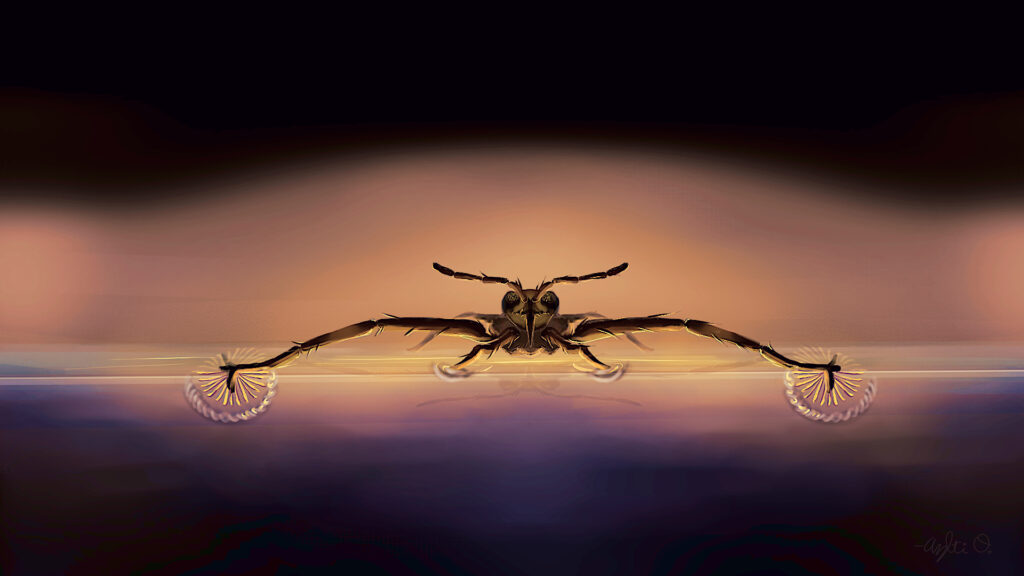
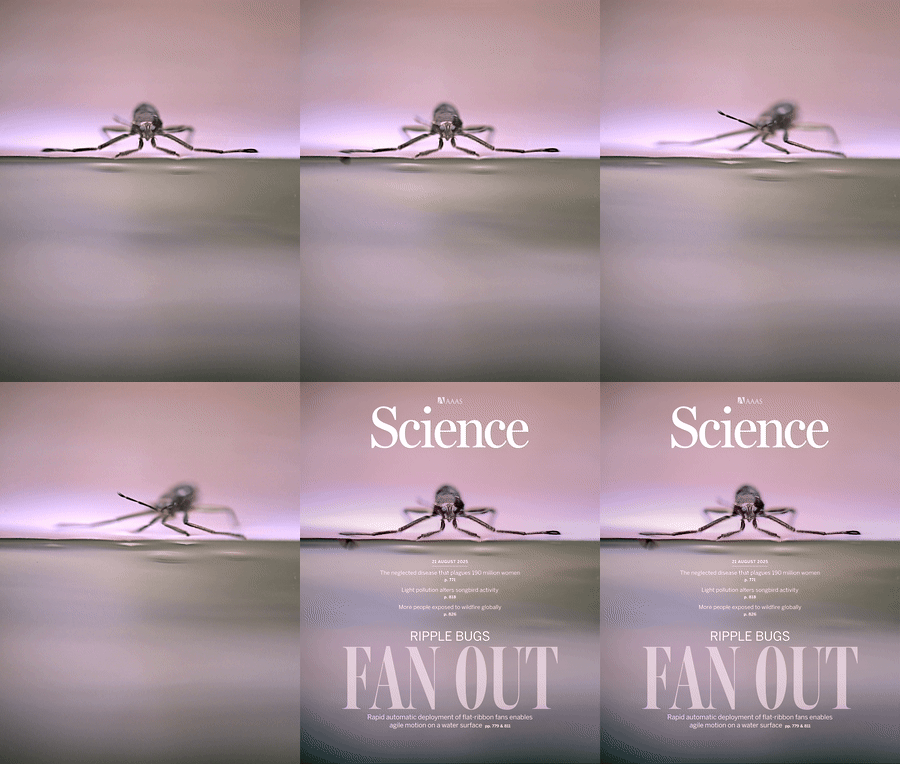
We are excited to share our new research on fanned water striders and robots, that is published in Science and featured on the cover.
Insights Gained from Simple Observation

I first observed ripple bugs while working as a postdoctoral researcher at Kennesaw State University during the pandemic. These tiny insects skimmed and turned so rapidly across the surface of turbulent streams that they resembled flying insects. The next day, I collected a few individuals and began filming them using the high-speed video cameras we had in the Lab. I was fascinated to see these little bugs making sharp turns and braking in less than 50 milliseconds. How do the do it? Answering that question took over five years and led me through four institutions -Kennesaw State University, Georgia Tech, the University of Maine and UC Berkeley.
Ripple Bugs Glide Using Smart Wing-like Oars
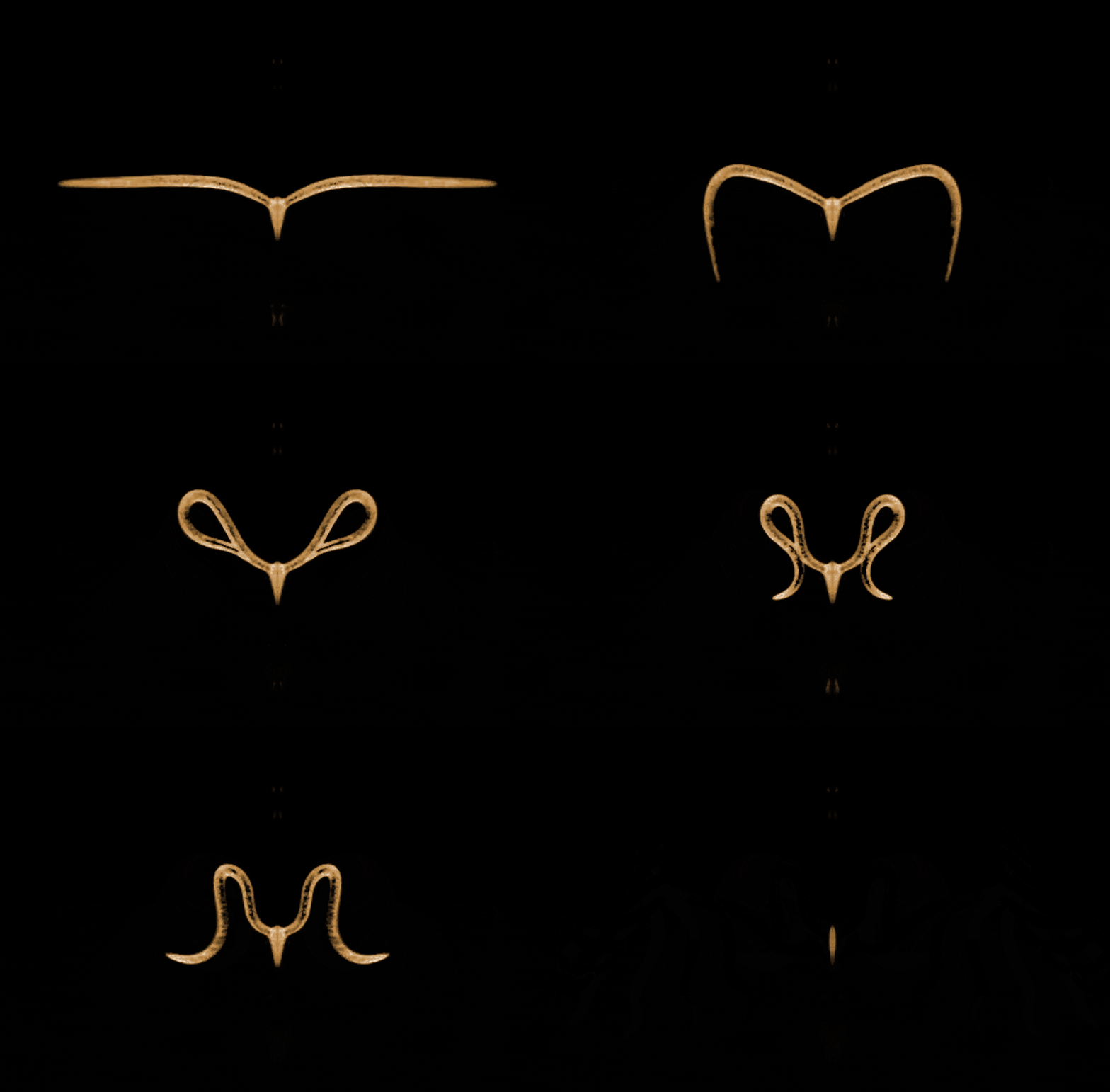
We discovered that the wing-like propellers of Ripple bugs that have in their legs exhibit elastocapillary responsiveness: they spread and collapse passively, like a paintbrush, in less than 10 milliseconds when submerged or removed from the water. We observed this rapid and passive fan actuation when individuals where rowing on the water and even when an isolated fan was placed gently on a water droplet.


These findings challenged the idea that these fan-like structures were exclusively powered by muscle. Instead, both passive and active modes of fan actuation plays a role during gliding, with the former requiring less energy.
Self-Deployable Fans enhance locomotion of insect-scale Robots
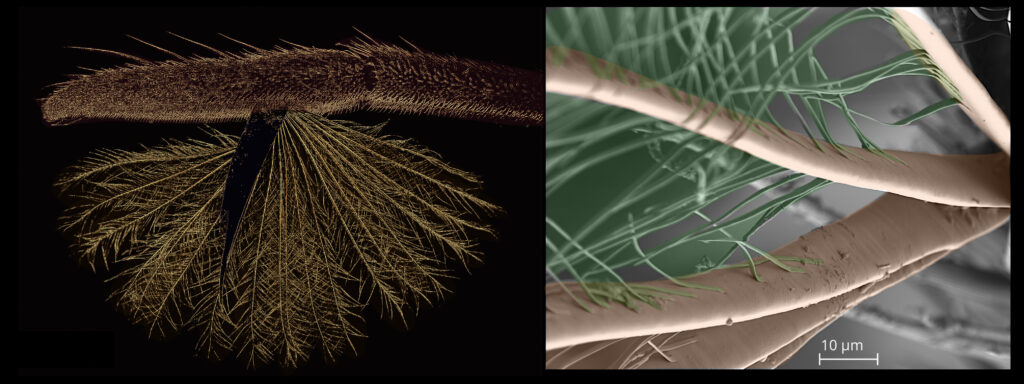
After we discovered that Rhagovelia bugs could self deploy rapidly their fans and exhibited remarkably maneuvering capabilities, we began collaborating with Dr. Dongjin Kim and Professor Je-Sung Koh from Ajou University. It was not until they captured scanning electron microscope images that they were able to design their bioengineered fan and insect-scale robot.

This fanned robbot, called Rhagobot, was able to generate greater thrust and higher turning rates compared to a robot without fans.

The Wake Signature of Rhagovelia Insects
I found that the vortical wake produced by ripple bugs during turning and propulsion closely resembles those generated by winged flying animals. This observation is intriguing because the bug’s small, wing-like propellers may be generating lift, not just drag, much like the wings of flying animals.

Furthermore, Rhagovelia insects also produce capillary waves during propulsion, which appear to aid in thrust generation, along with strong bow waves that form at the front of the body.

Fan propulsion for navigating turbulent waters
Ripple bugs navigate every day highly dynamic, wavy, and turbulent waters, while escaping predators, catching prey and finding mates. The relative levels of turbulence that these insects endure daily far exceed what we typically experience during airplane turbulence. We discovered that they row day and night throughout their lifespan, only pausing to molt or feed.


Finally our findings highlights how form and function of a biological adaptation shaped by natural selection, can enhance the locomotion and endurance of both water striders and bioengineered robots without incurring additional energy costs.